Thursday morning, the Bureau of Economic Analysis issued two press releases, and both are misleading.
Headline one: the economy is slowing. Real GDP grew just 1.5% annualized in the second quarter, down from 2.1% and below consensus. Cue the hand-wringing.
Headline two: inflation is improving. PCE inflation cooled to 3.7% year over year in June from 4.1% in May. Cue the victory laps.
Start with GDP. Private demand actually accelerated: final sales to private domestic purchasers — consumer spending plus private fixed investment — grew 3.9%, up from 1.7% in the first quarter. So where did the headline miss come from? Two places, and neither tells you anything about domestic demand. Imports surged 11.5%, a good chunk of it capital goods — semiconductors, telecom equipment, industrial machinery — the raw material of the data center buildout. Imports subtract from GDP by accounting convention (seems crazy, I know), but an economy buying capital goods hand over fist is not a sign of a weak economy. The second drag was “falling” government spending (I wish!). This primarily reflects crude oil sales from the Strategic Petroleum Reserve. When Uncle Sam sells oil, the statisticians book it as negative government consumption.
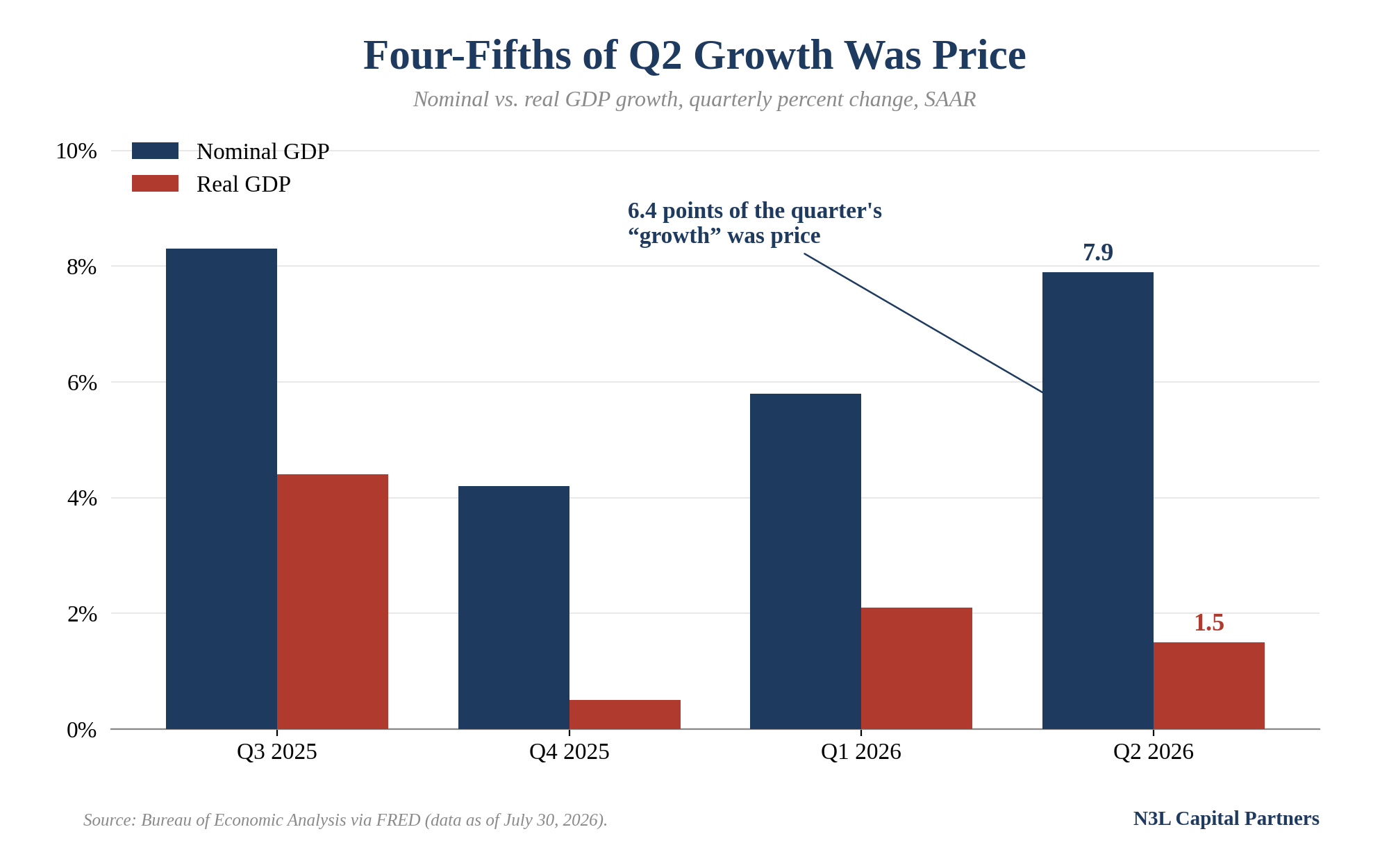
Now for the inflation “progress.” Headline PCE eased to 3.7% in June, but that was due to falling energy prices during the brief Iran ceasefire. That ceasefire is over. Oil has rebounded by more than 20% since then. The June improvement was borrowed from a peace that didn't hold, and the July data will likely hand it back with interest.
Core PCE, which subtracts food and energy (who needs those?)… is up 3.4% annualized in the second quarter. That's the sixth year running that inflation has held above the Fed's 2% target.
Meanwhile, the consumer is financing this economy the hard way. Spending grew faster than income in June, and the saving rate fell to 2.7%, near the lows of the past two decades. Households aren't spending out of abundance. They're spending out of necessity, at prices that keep rising, and drawing down savings to do it.
The Fed, for its part, held rates steady on Wednesday — with three members dissenting in favor of a hike. In an economy where private demand is running near 4%, and inflation is well above target, the decision was to think about it some more. In fairness, the Fed has no power to stop the war or repeal tariffs or repeal the “Affordable Care Act” — this inflation was made in Washington.
Unless otherwise noted, information included herein is presented as of the dates indicated. N3L Capital Partners (together with its affiliates, "N3L") makes no representation or warranty, expressed or implied, with respect to the accuracy, reasonableness, or completeness of any of the information contained herein, including, but not limited to, information obtained from third parties or government sources, including the U.S. Bureau of Economic Analysis, which is subject to revision by the source agency. Opinions, estimates, and projections constitute the current judgment of the author as of the date indicated. They do not necessarily reflect the views and opinions of N3L and are subject to change at any time without notice. N3L does not have any responsibility to update the information to account for such changes. Hyperlinks to third-party websites in these materials are provided for reader convenience only. There can be no assurance that any trends discussed herein will continue. The information contained herein is not intended to provide and should not be relied upon for accounting, legal, or tax advice and does not constitute an investment recommendation or investment advice. Readers should make an independent investigation of the information contained herein, including consulting their tax, legal, accounting or other advisors about such information. N3L does not act for you and is not responsible for providing you with the protections afforded to its clients. N3L and its affiliates may hold positions in securities, instruments, or asset classes discussed herein.
