Despite last week’s soft economic data, bond yields marched to their highest in 24 years. Oil prices fell yesterday, yet bond yields are up again. What are yields saying about inflation?
The current narrative among the chattering class is “If we could just stop the war and bring oil prices down, inflation will end, and interest rates will fall. Friday’s reversal in rates suggests…it’s complicated.”
Inflation is too much money…
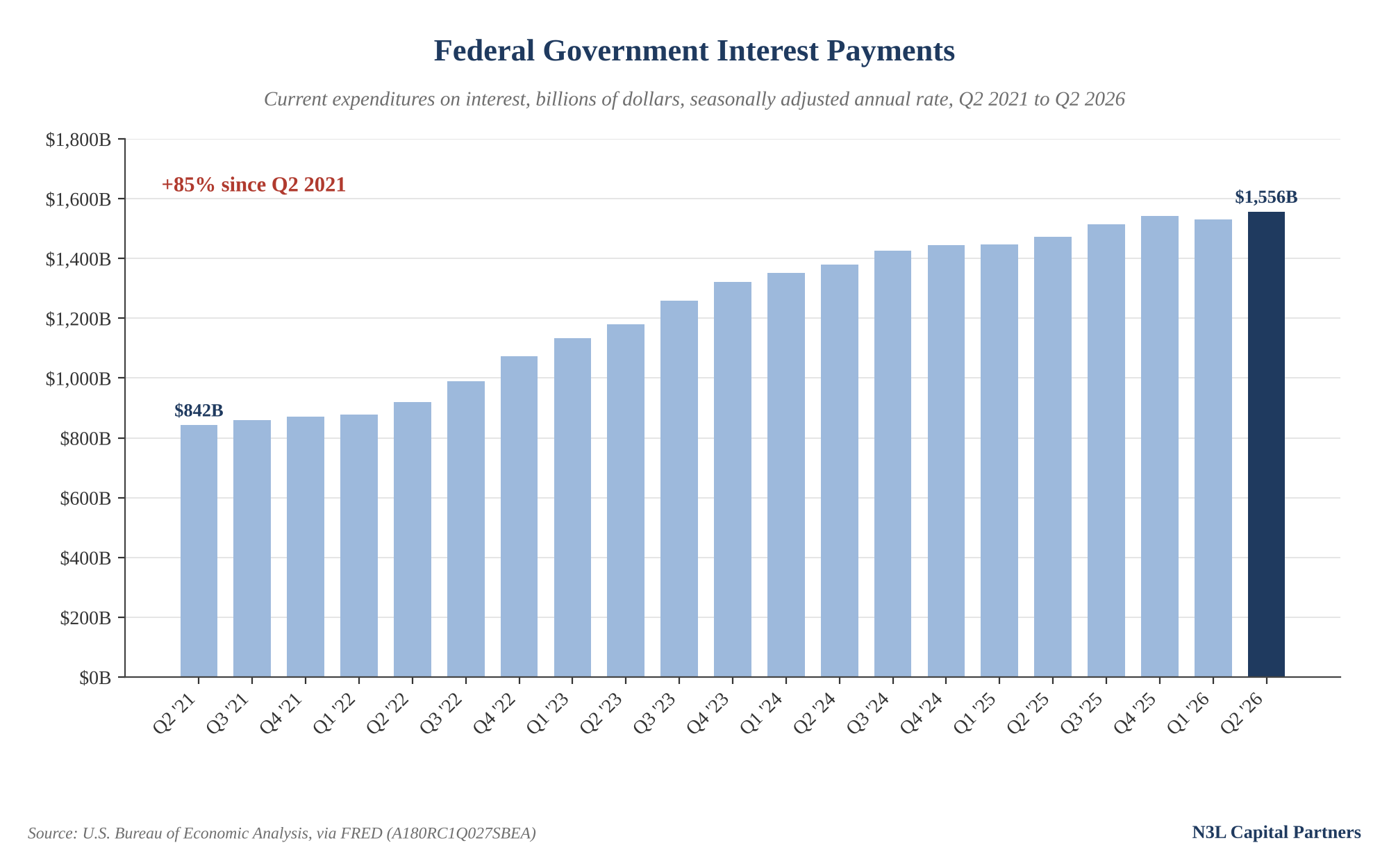
Since the GFC, the Fed has injected over $7t digital dollars directly into the economy. Add debt creation consisting of $40t and growing, $105t in unfunded obligations like Social Security, and a $2t annual budget deficit. The interest payments on the debt are $1.3t annually. That’s all short-term debt requiring bigger and more frequent Treasury auctions. Look at M2 below… the money supply is soaring. There’s a lot of money out there!
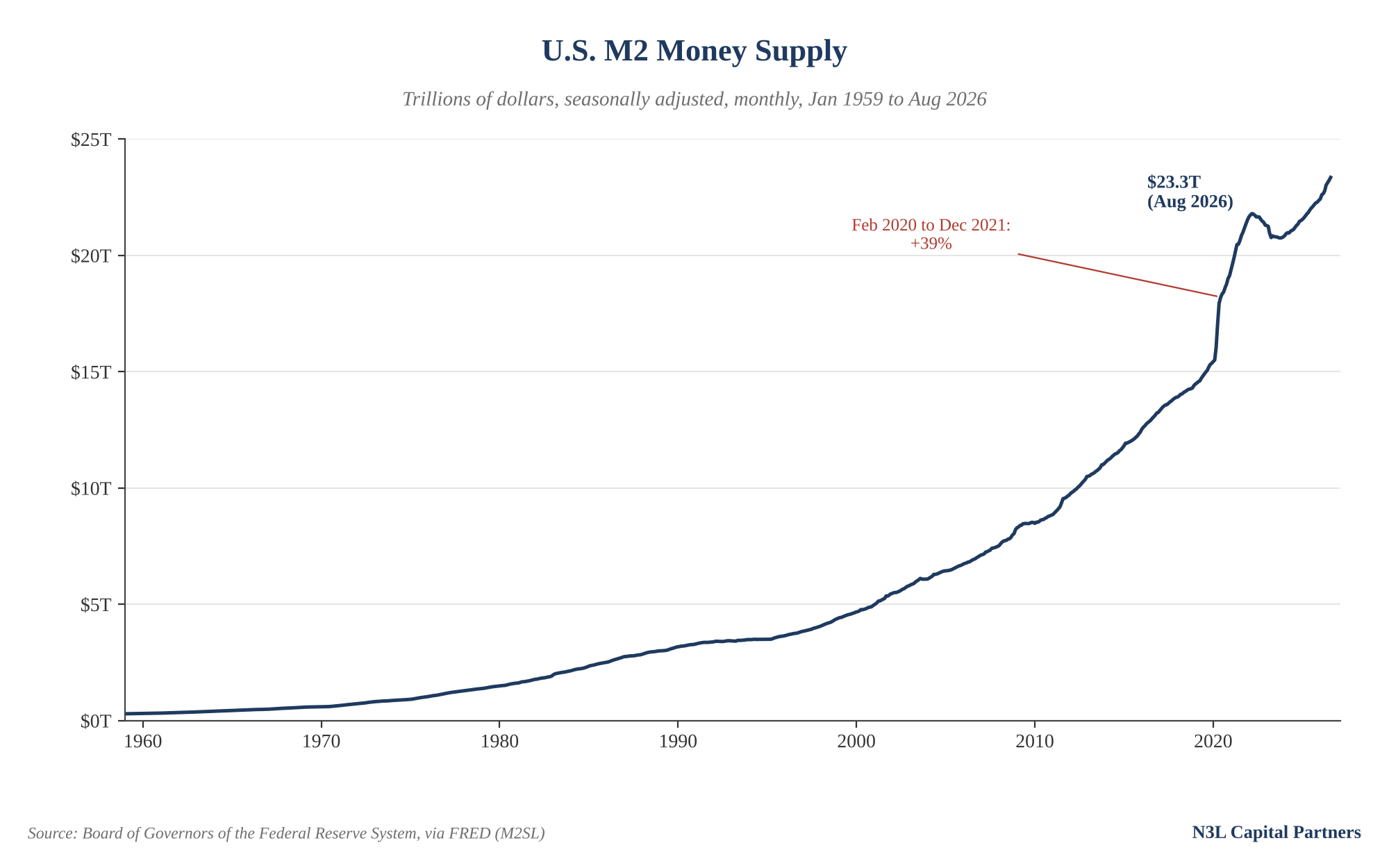
Inflation is too much money chasing too few goods…
Though they exacerbate it, oil prices are not the main driver of inflation. Besides money printing, tariffs are the bigger culprit. And once again, what started as a trade war has evolved into a hot war, as it often has historically.
Examining the data releases:
Inflation moderated? On Wednesday, September 30th, Personal Consumption Expenditures (PCE), a proxy for inflation, came in weaker than expected as a consequence of a convenient change in the methodology for calculating it. The change was implemented retroactively to 2021. Don’t look behind that curtain!
Yields initially fell as the probability of a rate hike fell from 45% to 37%. Then, suddenly, interest rates rallied and closed at the highest level since 2002. The government tried its best to create soft data so interest rates could fall, but it failed.
Then, on Friday, employment came in weaker than expected, which ostensibly takes pressure off the Fed to raise rates. The odds of a rate increase fell further, but actual rates did not.
What does the market know?
Below are interest costs on federal debt if rates stay constant.
Why are interest rates up?
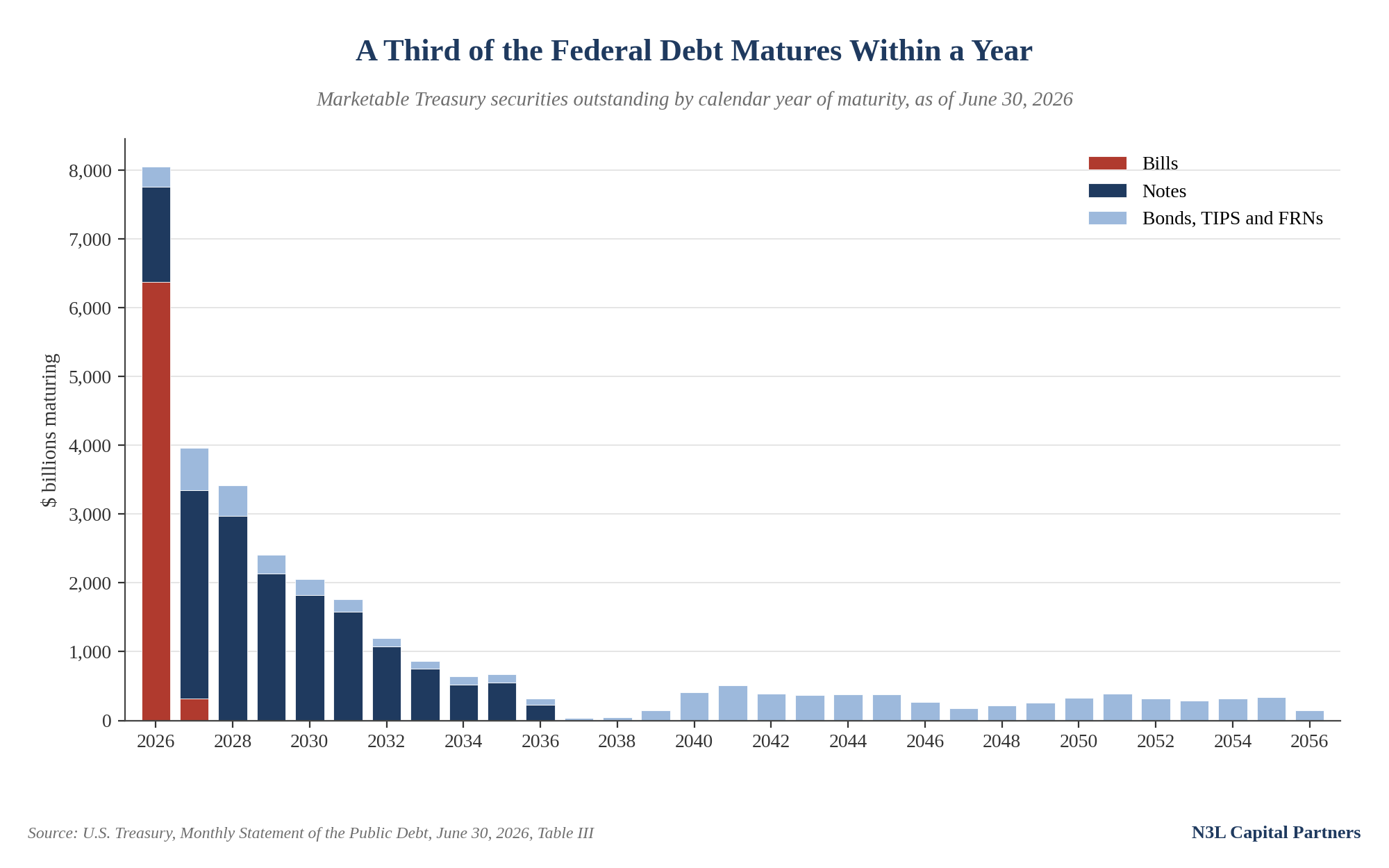
A flood of Treasury supply is coming to market, including $ 630 B this week. Most is refinancing maturing debt, but it’s still a lot. Not only does the Treasury have to finance the $2t deficit and pay the $1.3t interest on the debt, but they’ve got to refinance $10t in T-bills over the next 12 months.
I’ll leave you with two positives:
The U.S. economy and markets continue to benefit from the massive AI buildout. NVDA made an all-time high yesterday. I am keeping a sharp eye on the 10-year bond yields, which are down today. Financials and other sectors are showing yield-related stress. Underneath the surface, there is a lot of pain.
Brazil’s election Sunday is monumental for the country and Latin America.
Expect a note this week.
Unless otherwise noted, information included herein is presented as of the dates indicated. N3L Capital Partners (together with its affiliates, "N3L") makes no representation or warranty, expressed or implied, with respect to the accuracy, reasonableness, or completeness of any of the information contained herein, including, but not limited to, information obtained from third parties or government sources, including the U.S. Bureau of Economic Analysis, which is subject to revision by the source agency. Opinions, estimates, and projections constitute the current judgment of the author as of the date indicated. They do not necessarily reflect the views and opinions of N3L and are subject to change at any time without notice. N3L does not have any responsibility to update the information to account for such changes. Hyperlinks to third-party websites in these materials are provided for reader convenience only. There can be no assurance that any trends discussed herein will continue. The information contained herein is not intended to provide. It should not be relied upon for accounting, legal, or tax advice and does not constitute an investment recommendation or investment advice. Readers should make an independent investigation of the information contained herein, including consulting their tax, legal, accounting, or other advisors about such information. N3L does not act for you and is not responsible for providing you with the protections afforded to its clients. N3L and its affiliates may hold positions in securities, instruments, or asset classes discussed herein.
